Build the feedback app for this talk — the audience
will use it on their phones in about 15 minutes.

What I want: one mobile page — rate this talk (1–5),
one question, an optional comment. /results: live bars,
projector-friendly. Free text never appears there.

Follow CLAUDE.md for stack, design and the
non-negotiables.

When you are done: push, wait for the deploy, verify
the live URL with curl, then report back in one line.
⏎ sent — the agent is working now
Intent — what & for whom, not how
Constraints — live in the repo. Onboarding, not prompting
Verification — done means proven, not plausible
six lines. we check back in a few minutes.
My five years
I started CS in 2021 — the last cohort to learn coding without AI.
2021
Autocomplete
Copilot previews the summer I enroll. We still learn from Stack Overflow & exercise sheets.
2022/23
Chat
ChatGPT lands mid-degree. Copy, paste, adapt — the tutor that never sleeps. Universities debate bans.
2024
The IDE
Cursor & friends. AI moves into the editor — you dictate, it types.
2025
Agents
Claude Code ships. “Vibe coding” gets a name. You stop dictating — you delegate the ticket.
2026
Fleets
Agents in the cloud and in CI, working while you do something else.
02:14monitoring — created · export queue stalled, 4,112 orders pending
02:16automation — routed to Claude (triage agent)
03:07Claude · work note — Root cause: expired service-account token on the SFTP target. Proposed fix attached; replayed the batch against staging: 4,112/4,112 exported. Awaiting sign-off.
08:31P. Keck — first human view
The incident reaches the agent before it reaches me. My job starts at the sign-off.
recreated for this slide — the real ticket has customer names in it
Adoption
Where the industry actually is
Stack Overflow Developer Survey 2026: two thirds of developers now use coding agents — a year ago it was one third. Claude Code is #1 at 66 %, ahead of Copilot. (published Oct 6 · ~30,000 respondents)
The trust paradox: 63 % rarely or never let agents run fully autonomous. Usage doubled. Trust didn’t. (same survey)
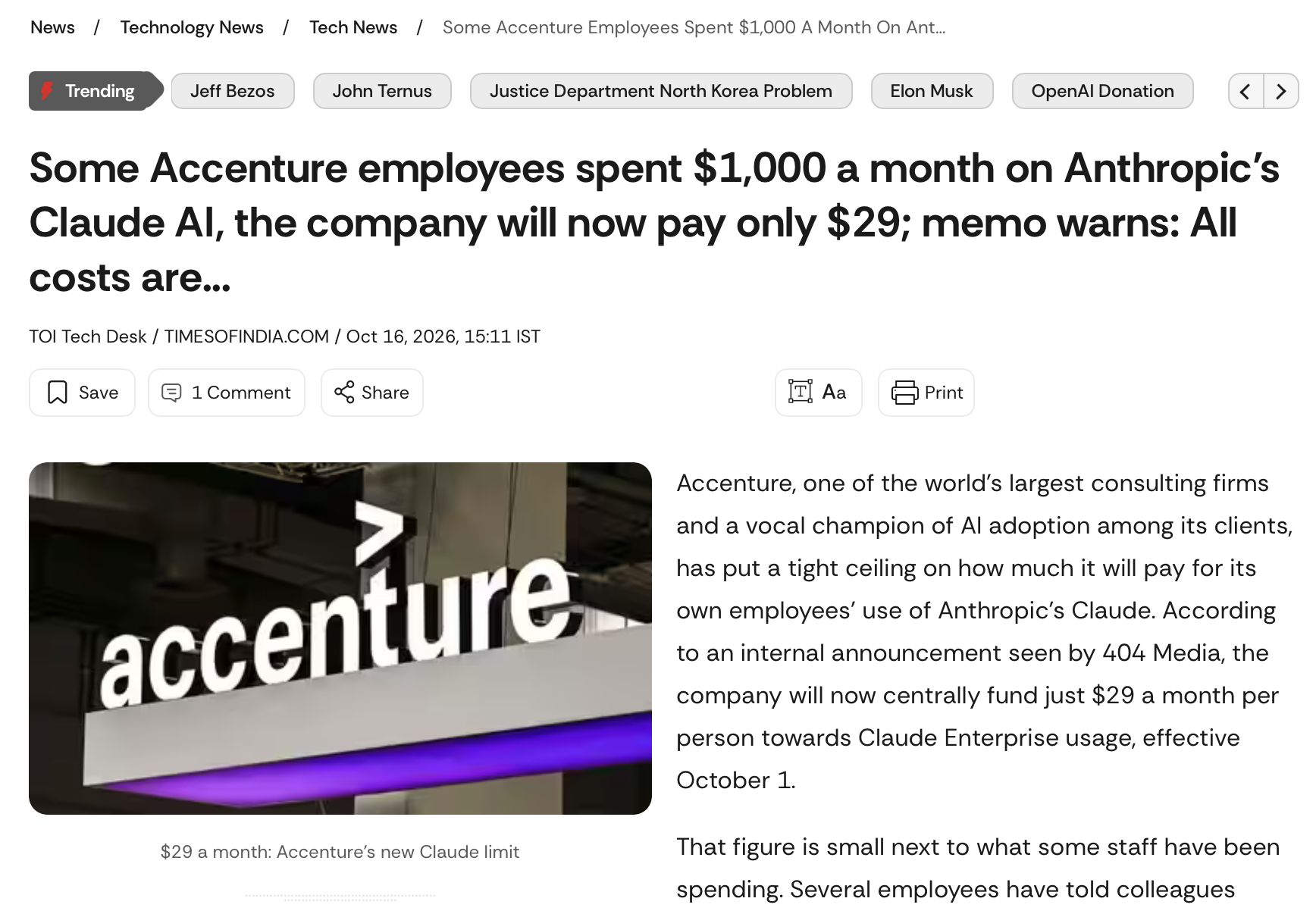
Times of India, Oct 16, 2026 · original reporting: 404 Media, Oct 15
One subheading further down
The costs didn’t disappear — they moved into the client projects.
Times of India, Oct 16, 2026 · original reporting: 404 Media, Oct 15
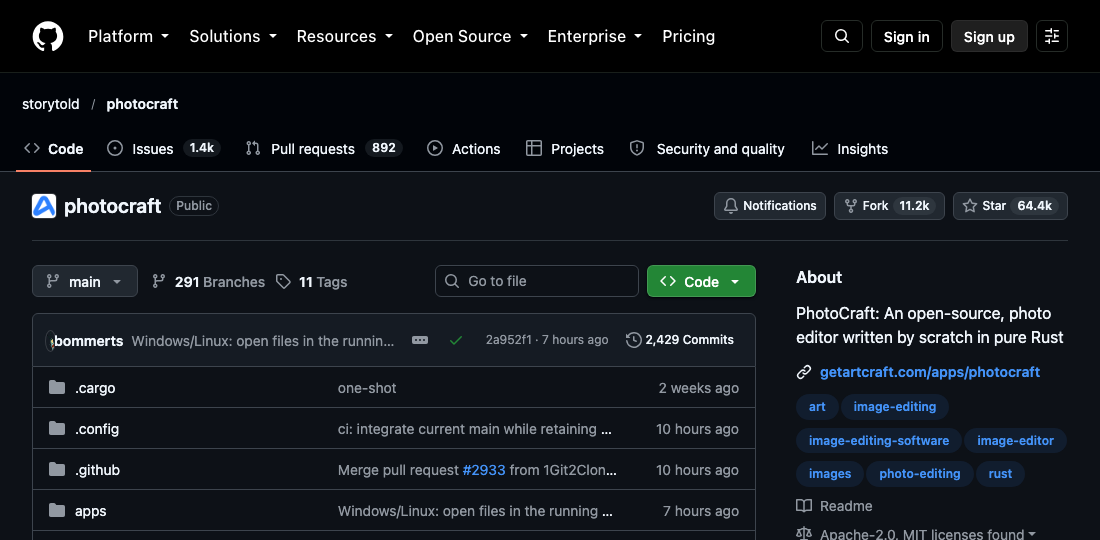
Fresh from GitHub trending: the “Photoshop killer”
64,354 ★
— the repo is 16 days old.
“Tested it: very broken software produced by AI … you may well call it deceptive.” — first tester, Hacker News, Oct 4 · 3 of 56 of its own performance budgets pass
The stars measured the story, not the software. Stars are vibes too.
The catch
Vibes aren’t value.
Agent code almost always looks right. It compiles, the demo works,
and the bug is already in the diff.
Generating code has become cheap. Verifying it has not.
The bottleneck moved from writing to judging — and judging is now your job.
“I ‘Accept All’ always, I don’t read the diffs anymore.” — the Feb 2025 tweet that coined “vibe coding”.
One year later its author retired the term himself, for “agentic engineering”: orchestration with oversight and review.
The loop
Where the human actually sits
Intentwhat & why
→
Contextrules & constraints
→
Planreview it
→
Buildthe agent’s part
→
Verifyread the diff
→
Shipyour name on it
the agent owns one box. you own the loop.
Not a coding thing: the same loop runs for contracts, reports, analyses — code is just where it’s most visible today.
What people underestimate
Three things that change the outcome
1
Context is onboarding, not prompting.
The agent is the best new hire you’ve ever had — permanently on day one. Conventions, constraints and no-gos live in the repo. That’s why my prompt was six lines.
2
Steer at the plan, not at the diff.
Ten seconds on the plan save ten minutes on 800 generated lines — the wrong architecture is cheapest to catch before any code exists.
3
Give it a way to verify itself.
Tests, a URL to curl, a screenshot. “Done” without proof is a vibe. That’s why the prompt ends with: verify, then report.
delegation is a skill.
The honest part
Where it breaks
Regulated systems. In finance, traceability isn’t overhead — it is the product. Generation speed was never the constraint.
Review bandwidth. If one agent produces what five developers used to, review becomes the bottleneck — speeding up generation makes it worse, not better.
The bottleneck isn’t generation anymore. It’s the review queue.
Chen & Stratton (Harvard), working paper Aug 2026 — Jellyfish data 2021–2026 · fion.ac/jellyfish.pdf
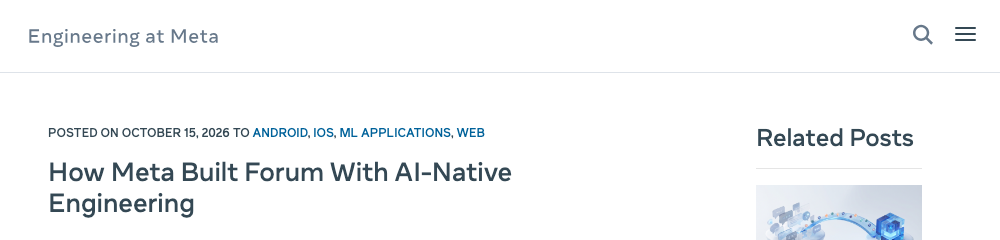
Meta Engineering, yesterday — their own section heading:
“From human-in-the-loop to human-on-the-loop.”
“The agent runs the iteration itself … the engineer sets the goal, steps in when it drifts, and approves the result.”
a full app, feature parity with Facebook Groups in eight weeks
On the loop, not out of it: “Every shipped outcome still carries an engineer’s sign-off.”
Where to stand in the loop
Depends on the task
← the agent runs ityou run every step →
check the result
Bang out a PoC
Agent end-to-end: plan, build, verify, ship. Tonight’s feedback app is exactly this class.
review plan & diff
Clear frontend tickets
The agent does the routine, you own the merge — Meta ran Forum like this for eight weeks.
in every iteration
Touch the core system
Regulated, old, or money-moving code: the human stays in each cycle. Mortgage math, for example.
off the dial
“Rebuild SAP”
That’s not a ticket, that’s a company. 64,354 stars won’t make it true.
For the students
Your starter loop
1
A repo with a CLAUDE.md. Write down stack, conventions, what “done” means. Congratulations — you now think like a tech lead.
2
Tests + GitHub Actions. CI is the agent’s way to verify itself — green checks before you even open the diff. Free tier; Student Pack covers the rest.
3
An agent + the discipline. Let it plan, let it build — then read the diff. Every agent bug is caught with fundamentals: error handling, query cost, null semantics. The basics didn’t become obsolete — they became the job.
the setup takes a weekend. the judgment takes a degree.
15 minutes ago, this was an empty repo
Rate this talk — on the app that didn’t exist when I started talking.